Are electric skateboards legal in Quebec?
Specific law, with conditions. Quebec is the only jurisdiction we have read where an electric skateboard sits squarely inside a written framework — and where almost no board on sale can legally meet it. A pilot project in force since 2023 defines the “motorized personal transport device” broadly enough to catch a skateboard, then requires wheels of at least 190 mm. Most electric skateboards run 70 to 110 mm. The device is permitted in principle and disqualified in practice, and no shop selling into Quebec says so. City rules we have read on top of it: Montréal.
19 electric skateboards in stock in Canada, priced at each shop ↓
What the law says
| What the text says | Section | |
|---|---|---|
| What counts as one | A vehicle meant to carry people that “is fitted exclusively with electric motors”, “has at least one wheel”, and “has no cabin enclosed by a rigid or soft material”. The exclusions are the motorcycle, the moped, the power-assisted bicycle, the motorized mobility aid, the motorized toy vehicle and off-road vehicles — an electric skateboard is none of these, so it is an ATPM. | RLRQ c. C-24.2, r. 39.1.002 |
| Wheel diameter — the rule that decides | “The overall diameter of the wheels of the ATPM is at least 190 mm” (s. 6). This is the provision that takes most electric skateboards out, and it is worth measuring your own board before assuming anything. | RLRQ c. C-24.2, r. 39.1.002 |
| Motor and speed | Maximum rated power 500 W, combined across motors, and the drive must cut out at no more than 25 km/h (s. 4). | RLRQ c. C-24.2, r. 39.1.002 |
| Weight | No more than 36 kg including the battery (s. 5). | RLRQ c. C-24.2, r. 39.1.002 |
| Brakes | Every wheel must have a brake that stops the device promptly on dry level pavement; a hub motor able to do that counts as a brake (s. 7). Except for a self-balancing device, two independent brake systems are required, one of them mechanical (s. 8). | RLRQ c. C-24.2, r. 39.1.002 |
| Minimum age | Only a person at least 14 years old may ride an ATPM on a public road, and must carry proof of age and show it to a peace officer on request (s. 16). | RLRQ c. C-24.2, r. 39.1.002 |
| Helmet | Required. A rigid shell, padded inside, with a chin strap, correctly fitted and firmly fastened (s. 17). | RLRQ c. C-24.2, r. 39.1.002 |
| Where you may ride | Riding is prohibited on a public road posted above 50 km/h, except to cross at an intersection, to move between two 50 km/h roads through a roundabout, or on a cycle lane physically separated from the roadway (s. 19). Cyclist obligations under the Highway Safety Code apply (s. 31), and a road authority may ban ATPMs from a lane or road by posting the sign set out in the regulation (ss. 33-34). | RLRQ c. C-24.2, r. 39.1.002 |
| Lights and reflectors | Red reflector at the rear and on each side, white at the front, visible at 150 m (ss. 10, 13). At night, a white lamp at the front and a red one at the rear (s. 12), which may be replaced by a light worn by the rider. | RLRQ c. C-24.2, r. 39.1.002 |
| What it costs to get it wrong | Riding a non-compliant device draws a $200 fine for the power and weight rules and $100 for the equipment rules in sections 6 to 15 (s. 44). Riding without a helmet, above 50 km/h roads, or against the cyclist rules is $100 (s. 46). | RLRQ c. C-24.2, r. 39.1.002 |
| It is a pilot project, not permanent law | The instrument is a ministerial pilot project made under section 633.1 of the Highway Safety Code, in force since 2023 and amended in 2024 and 2025. Pilot projects expire and get replaced. The text we read is the consolidation current to 15 April 2026. | RLRQ c. C-24.2, r. 39.1.002 |
Each row is the statute's own content, reduced to plain wording where it is long and quoted directly where the exact words matter. The section in the last column is a link to the text.
Electric skateboards in stock in Canada
Priced at shops in Canada, in the currency they charge. Real deals and new lows first, then the lowest price; checked twice a day at the shop itself. We do not rate boards and take no payment for a place here.
| Product | Best price | Verdict | Buy |
|---|---|---|---|
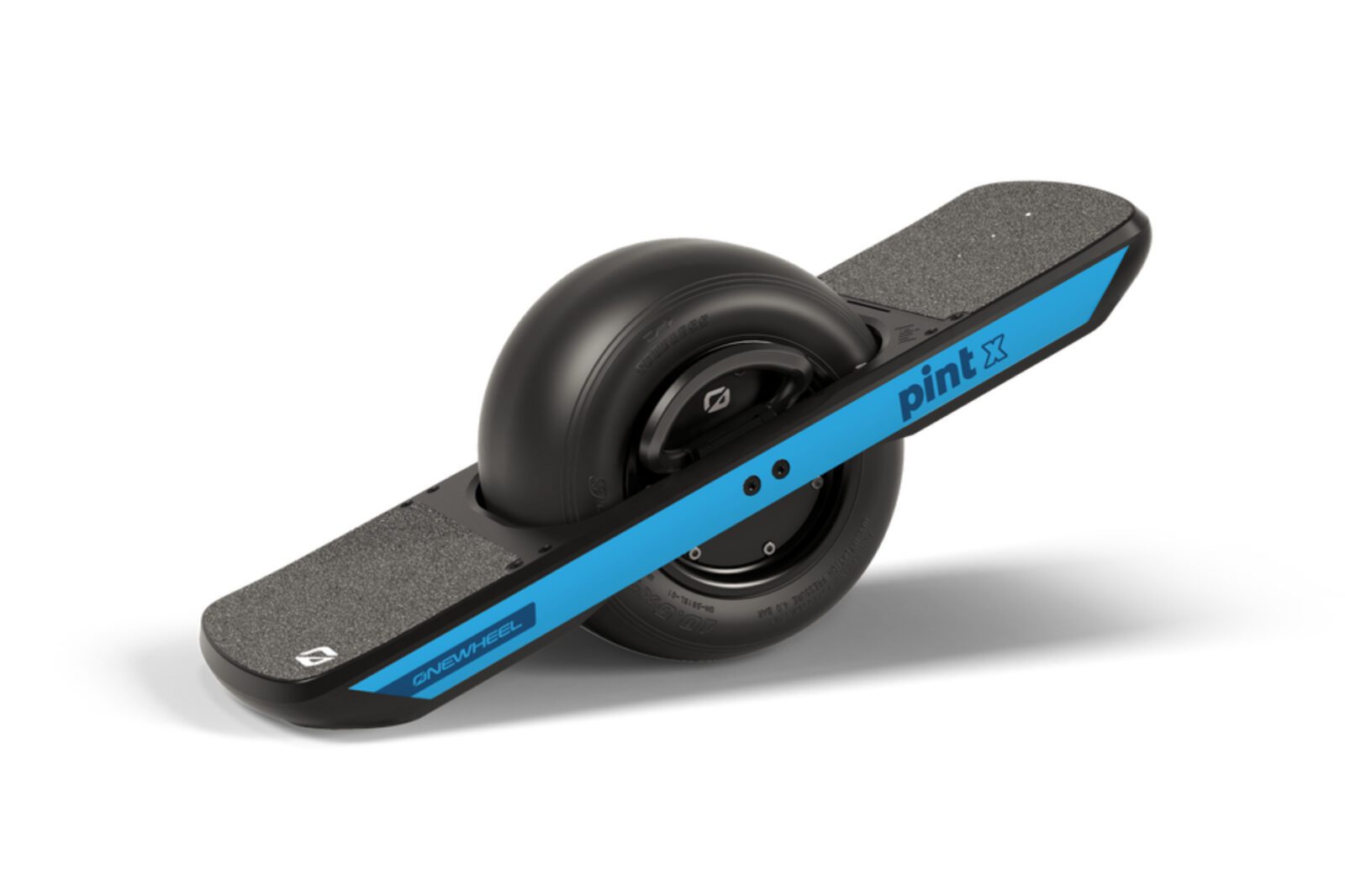
Onewheel Pint X
🇨🇦epiccycles.ca |
CA$1750.00 | ✓Real deal | |

Onewheel XR Classic
🇨🇦versusproshop.com |
CA$2700.00 | ✓Real deal | |

Backfire G2 Electric Skateboard
🇨🇦longboardliving.com |
CA$600.00 | ✓Cheaper than 2021 | |

Onewheel Pint S
🇨🇦vintageironcycles.com |
CA$2999.00CA$2175.00 | –Only listing | |

CUSTOM BUILT ONEWHEEL SPORT SERIES GT-S 40KM RANGE – SPEED 40KPH
🇨🇦longboarderlabs.com |
CA$3289.00 | –Only listing | |

Onewheel GT
🇨🇦vintageironcycles.com |
CA$4399.00CA$3499.00 | –Cheaper in 2024 |
All 19 electric skateboards from shops in Canada · today's real deals · the cheapest one · 37 under $500 · 113 under $1,000 · what one costs · recalls and safety alerts.
What the law above asks you to wear or fit: 77 helmets and pads in stock — a rule above names the helmet; 31 lights in stock — a rule above covers riding after dark.
Sources
-
RLRQ c. C-24.2, r. 39.1.002 — Projet pilote relatif à l’utilisation des appareils de transport personnel motorisés.
Official source, read 2026-09-20.
Read on Légis Québec, which states “Ce document a valeur officielle” and dates the consolidation to 15 April 2026. The regulation is in French; the wording above is our translation, and the section numbers let you check it against the original.
Every source on this page is the text as published by the legislature or the state agency itself. Open them.
How Quebec compares
The same four questions for Quebec and its neighbours, each linked to its own page and citations. All 99 jurisdictions we have read are side by side on Compare all jurisdictions.
| Jurisdiction | Status | Helmet | Speed limit |
|---|---|---|---|
| Quebec | Regulated | Required. A rigid shell, padded inside, with a chin strap, correctly fitted and firmly fas | Maximum rated power 500 W, combined across motors, and the d |
| Maine | Prohibited | no rule naming the device | — |
| New Hampshire | Prohibited | no rule naming the device | — |
| New York | Prohibited | no rule naming the device | — |
| Vermont | Prohibited | no rule naming the device | — |
| New Brunswick | Prohibited | no rule naming the device | — |
| Newfoundland and Labrador | Prohibited | no rule naming the device | — |
| Ontario | Prohibited | no rule naming the device | — |
| Montréal | Unaddressed | no rule naming the device | By-law 10-020, art. 12: whoever travels by bicycle, on in-li |
Compare all 99 jurisdictions →
The spread is the point. These are neighbouring jurisdictions regulating the same object, and they do not agree on what it is, how fast it may go, who may ride it, or whether it may be ridden at all. A rider who crosses a state line is, quite often, subject to a different legal category rather than a stricter version of the same one — which is why a single national answer to this question does not exist and why anyone offering you one has stopped reading the law.
It also explains why so many rows say the device is unaddressed. Most vehicle codes were written before this machine existed, and a legislature that has not revisited them has not thereby permitted anything — it has left the question to a general classification and to your city.
What about a Onewheel?
Covered by a pilot project, with limits to check. Quebec's pilot project on motorized personal transport devices covers any electric vehicle that “has at least one wheel” and no cabin. The rule that shuts out most four-wheel boards — wheels of at least 190 mm — does not stop a Onewheel: the replacement tires sold for it are listed at 11 to 11.5 inches. The limits that remain are a 500 W rated motor, a cut-off at 25 km/h and 36 kg; we do not publish motor ratings, so check your model against them. Self-balancing devices are exempt from the second, mechanical brake.
Every jurisdiction that names a one-wheel board, side by side: Are Onewheels legal?
Onewheel prices, read at the shops: what a Onewheel costs new · used Onewheel prices · Onewheel or electric skateboard · buy or sell a used one.
What this page does not tell you
- It is not legal advice, and it never says you may ride. It says what the statute says, and links it.
- It does not cover municipal law, except where linked above. Cities regulate sidewalks, parks, paths and often these devices by name. Those rules sit on top of everything above.
- It does not cover private property, insurance, or what happens after an accident.
- It may be out of date. Every source carries the day we read it. A statute amended since then will not have updated itself here.
Across the border: Ontario · New Brunswick · Newfoundland and Labrador · New York · Vermont · New Hampshire · Maine · Montréal. Every other jurisdiction: the full list.
Questions this raises
Are electric skateboards legal in Quebec?
A statute names the device and sets out what is required to ride it. Quebec is the only jurisdiction we have read where an electric skateboard sits squarely inside a written framework — and where almost no board on sale can legally meet it. A pilot project in force since 2023 defines the “motorized personal transport device” broadly enough to catch a skateboard, then requires wheels of at least 190 mm. Most electric skateboards run 70 to 110 mm. The device is permitted in principle and disqualified in practice, and no shop selling into Quebec says so.
Is a Onewheel legal in Quebec?
Covered by a pilot project, with limits to check. Quebec's pilot project on motorized personal transport devices covers any electric vehicle that “has at least one wheel” and no cabin. The rule that shuts out most four-wheel boards — wheels of at least 190 mm — does not stop a Onewheel: the replacement tires sold for it are listed at 11 to 11.5 inches. The limits that remain are a 500 W rated motor, a cut-off at 25 km/h and 36 kg; we do not publish motor ratings, so check your model against them. Self-balancing devices are exempt from the second, mechanical brake.
Do I need a helmet in Quebec?
Required. A rigid shell, padded inside, with a chin strap, correctly fitted and firmly fastened (s. 17). That is RLRQ c. C-24.2, r. 39.1.002.
How fast am I allowed to go in Quebec?
Maximum rated power 500 W, combined across motors, and the drive must cut out at no more than 25 km/h (s. 4). That is RLRQ c. C-24.2, r. 39.1.002.
Does this cover city rules?
No. This page reads state, provincial or national law only. Municipal codes frequently add rules — on sidewalks, parks and paths especially — and where the state has written nothing, the city has written everything. For Montréal, we have read the city code too.
How do I check this myself?
Open the links in the sources below. Every row in the table above names the section it comes from, and every source shows the date we read it. That is the whole point of the page: you should not have to take our word for it.